How to Choose the Right Outdoor Rug Size for Your Patio Layout
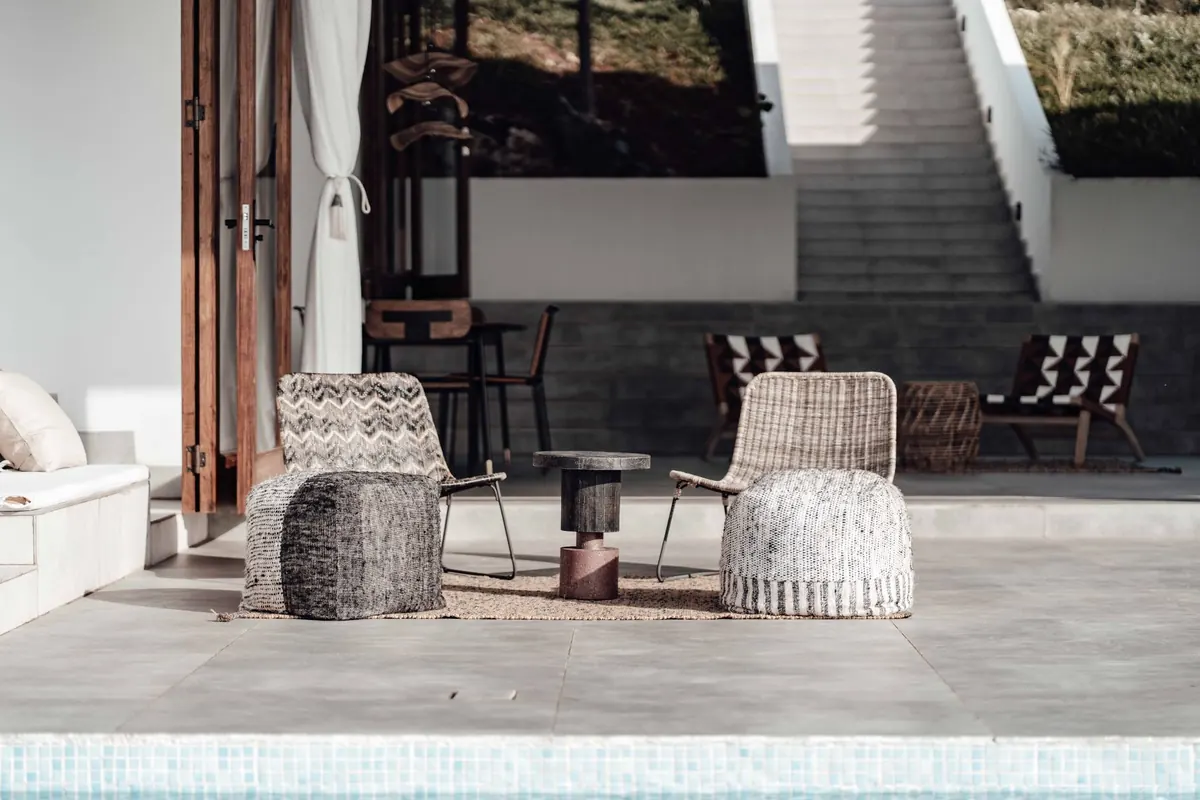
A rug is the quickest way to make a patio read as a room. It softens hard pavers, warms up bare feet, and quietly tells guests where the conversation happens. The mistake almost everyone makes has nothing to do with color or material. It is size. Buy one that is slightly too small and the whole arrangement looks apologetic, like a placemat under a picnic table.
Getting it right takes ten minutes with a tape measure and a roll of painter's tape. Here is how to think it through for the three layouts that cause the most trouble: dining sets, lounge groupings, and the narrow balcony that seems to accept nothing.
Start With the Furniture, Not the Empty Space
Most people measure the patio and then go shopping. Flip that. The rug exists to serve the furniture, so measure the furniture footprint first, then add clearance based on what humans do around it: pull chairs out, swing legs over the side of a chaise, set down a drink.
Before you order anything, mark the rug's outline on the ground with painter's tape. If you would rather not stick tape to a wood deck, lay down a bedsheet or a tarp and fold it to size. Walk around it. Drag a chair across the edge. This step catches the two problems that photos hide: a rug that crowds the railing, and a rug whose edge lands exactly where chair legs want to be.
The 24-Inch Rule for Dining Sets
This is the one rule worth memorizing. For a dining table, the rug should extend at least 24 inches past the table edge on every side where a chair can sit. That number is roughly how far a chair slides back when someone stands up. If the rug stops short, back legs drop off the edge mid-meal, and you get the tipping, wobbling, scooching routine that ruins a dinner.
The math is simple. Measure the table, then add 24 inches to each side.
- A 72-by-40-inch rectangular table needs a rug of at least 120 by 88 inches.
- A 60-inch round table needs an 8-foot round rug, or a 9-by-12 rectangular one.
- A 48-inch round table works with a 7- or 8-foot round rug.
If your space cannot fit that clearance, you have a few honest options. Skip the rug in the dining zone and let the pavers show. Or choose a smaller rug that sits entirely under the table base, so the chairs stay on the hard surface and the rug edge never sits under a leg while someone is seated. What you do not want is a rug edge parked in the middle of a chair's travel path.
Match the rug shape to the table shape
Rectangular table, rectangular rug. Round table, round rug. A round rug under a long rectangular table leaves two diners sitting on tile, and a rectangular rug under a round table looks like a mistake someone is trying to explain. There are exceptions when the goal is layering, but as a base layer, keep the shapes aligned.
Lounge Zones: Front Legs On, Back Legs Off
Conversation seating follows a different logic. The rug should sit under the front legs of every piece of seating, with the back legs off. The coffee table should be fully on. As a rough guide, run the rug 6 to 12 inches beyond the outer lines of the sofa and chairs, so the seating looks anchored rather than perched.
To size it, measure across the widest part of the grouping, then add 6 to 12 inches on each side. A typical seven-foot sofa paired with two armchairs lands on an 8-by-10 rug. A large sectional or a big four-chair arrangement usually wants 9-by-12. If you have the room and prefer every leg on the rug, go bigger—just keep the walkway around it clear so people are not stepping on and off constantly.
Narrow Balconies and Small Terraces
A balcony four to six feet deep will not accept a standard-size rug, and forcing one in makes the space feel tighter than it did bare. Use runners instead: 2-by-5, 2-by-6, or 2.5-by-8, set along the longest wall. A pair of small mats flanking a bistro table works well too.
Leave four to six inches of floor showing at each edge. A rug that runs wall to wall or presses into the railing looks wedged in, and it traps water and leaf litter. Keep it clear of drain paths and away from where potted plants drip.
Check the door swing first
Sliding and hinged doors are the quiet rug killers. A rug thick enough to catch the bottom rail will bunch up every time the door opens. Measure the gap under the door, then either keep the rug fully outside the door's arc or choose a flat-weave, low-profile rug that clears it. This matters most on balconies, where a rug often has to pass in front of the door anyway.
Shape, Orientation, and Layering
Orient a rectangular rug so its long side runs parallel to the longest piece of furniture or the longest wall. On a long, narrow terrace, a runner or a long rectangle stretches the space. On a square patio, a square or round rug feels more settled. When in doubt, mirror the shape of the area you are defining.
Layering is a useful trick on larger patios: a big neutral rug as the base, a smaller patterned one on top. Keep the top rug at least 12 to 18 inches inside the bottom one, and keep their edges parallel. A flat-weave base under a slightly softer top layer also hides the fact that outdoor rugs rarely come in every dimension you might want.
A Quick Checklist Before You Order
- Measure the furniture, not the empty patio.
- Add 24 inches per side for dining chairs to pull out.
- Add 6 to 12 inches beyond the sofa and chair lines in a lounge zone.
- Leave four to six inches of floor visible at walls, railings, and edges.
- Check door swing, drain paths, and step-downs.
- Confirm chair legs land on the rug's field, never on its edge.
- Choose a quick-drying synthetic weave for damp or humid climates; natural fibers can stay damp and hold mildew.
Tape It Out, Live With It, Then Buy
The tape outline is the whole trick. Leave it down overnight. Make coffee, walk out, and see whether the proportions feel calm or cramped. Pull a chair back to the spot where someone would stand, and check that it stays on the rug.
If the taped shape works, order that size and give yourself a little margin—rugs can vary slightly, and a few extra inches rarely hurt. If it feels tight, go one size down rather than squeezing a large rug into a small footprint, and let the patio floor show through. A well-proportioned rug should look like it belongs to the furniture, not like it is trying to cover the whole yard.
Photo: Keegan Checks / Pexels