Best Outdoor Furniture Materials for a Rooftop Terrace: Teak vs Aluminum vs Rattan

A rooftop terrace is a harder home for furniture than almost any other spot on the property. There is no shade tree, no fence, no overhang — just full sun for most of the day, wind that arrives from every direction, rain that pools wherever a frame gives it a place to sit, and a long trip down the stairs when the weather turns.
That last part matters more than most shoppers expect. On a roof, you are not only choosing a look. You are choosing how often you will be wiping, oiling, hauling, covering, or replacing something several flights up. Teak, aluminum, and rattan all work up there, but they ask for very different things from you.
Start with your roof, not the showroom
Before you fall for a set online, walk your space at different times of day. Note where the sun lands at noon and where it bakes at four in the afternoon. Watch how wind moves across an open corner — gusts at height are stronger and more persistent than they are in a sheltered garden, and a lightweight chair that never moved on a ground patio can end up against the parapet after a storm.
Check two practical limits as well. First, weight: you or your building manager should know what the roof structure comfortably supports, especially if you are eyeing a heavy dining table with a stone top. Second, access. Measure the door, the elevator, and the tightest turn in the stairwell before buying anything that arrives assembled.
Teak: the long-haul choice
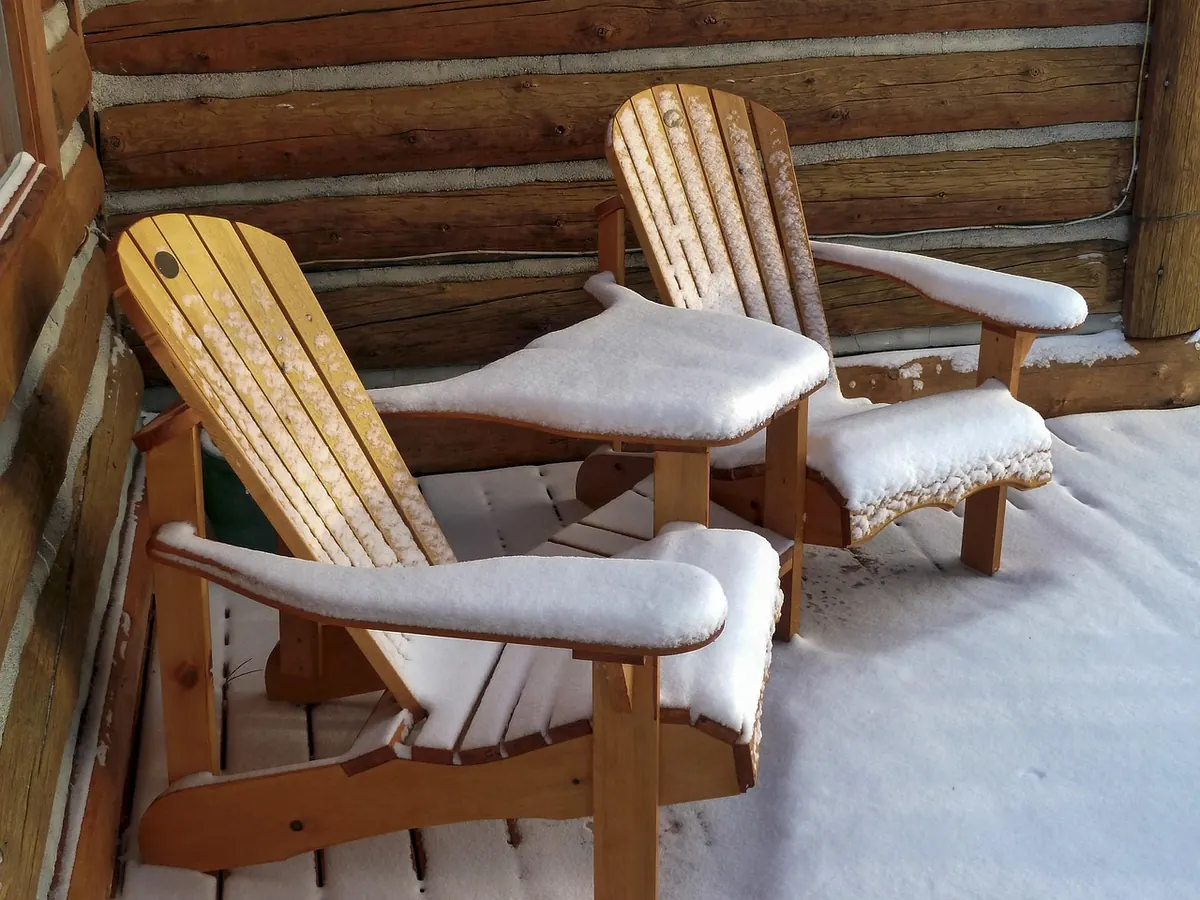
Teak is a dense tropical hardwood with natural oils that make it resistant to rot and insects. It has been used on boat decks for generations for good reason, and a well-made teak table left outside for twenty years is not an unusual sight. Left untreated, it weathers to a soft silver-grey that many people prefer. If you want to keep the warm honey tone, a light oiling once or twice a year will do it — though in humid climates, over-oiling can encourage surface mildew, so less is usually better than more.
Routine care is genuinely simple: a soft brush, mild soap, and water. Skip the pressure washer, which roughs up the grain. Check bolts and joinery each spring and tighten as needed. Teak feels warm rather than hot in direct sun, and it has a solid, planted weight that stands up to wind without ballast. That weight is the tradeoff, along with cost — teak is typically the most expensive of the three upfront. If you buy it, look for wood from a responsibly managed source, since older-growth teak is not a renewable resource in the way most people assume.
Aluminum: light, low-fuss, and practical
A powder-coated aluminum frame will not rust, which makes it the easiest of the three to live with on an exposed roof. It shrugs off rain, dries quickly, and needs little beyond a wipe with mild soapy water. In coastal areas, look for marine-grade powder coating and rinse off salt spray occasionally, since salt can pit bare metal where the finish has been scratched.
The catch is the very thing that makes aluminum convenient: it is light. That is a gift when you are rearranging a small terrace, and a problem when a front moves through. Weighted bases, stackable chairs you can tip over before a storm, and a dining table with a solid top all help. Metal also heats up fast in full sun, so cushions are not optional on a south-facing roof, and bare arms on a chair frame can feel cold in shoulder seasons.
When you shop, put your hand on the joints. Welded corners hold up better outdoors than bolted ones that work loose, and a slightly thicker gauge of tubing resists denting and flexing far better than a thin one.
Rattan: read the label carefully
Rattan is where most rooftop purchases go wrong, because the word covers two very different products.
Natural rattan vs. synthetic wicker
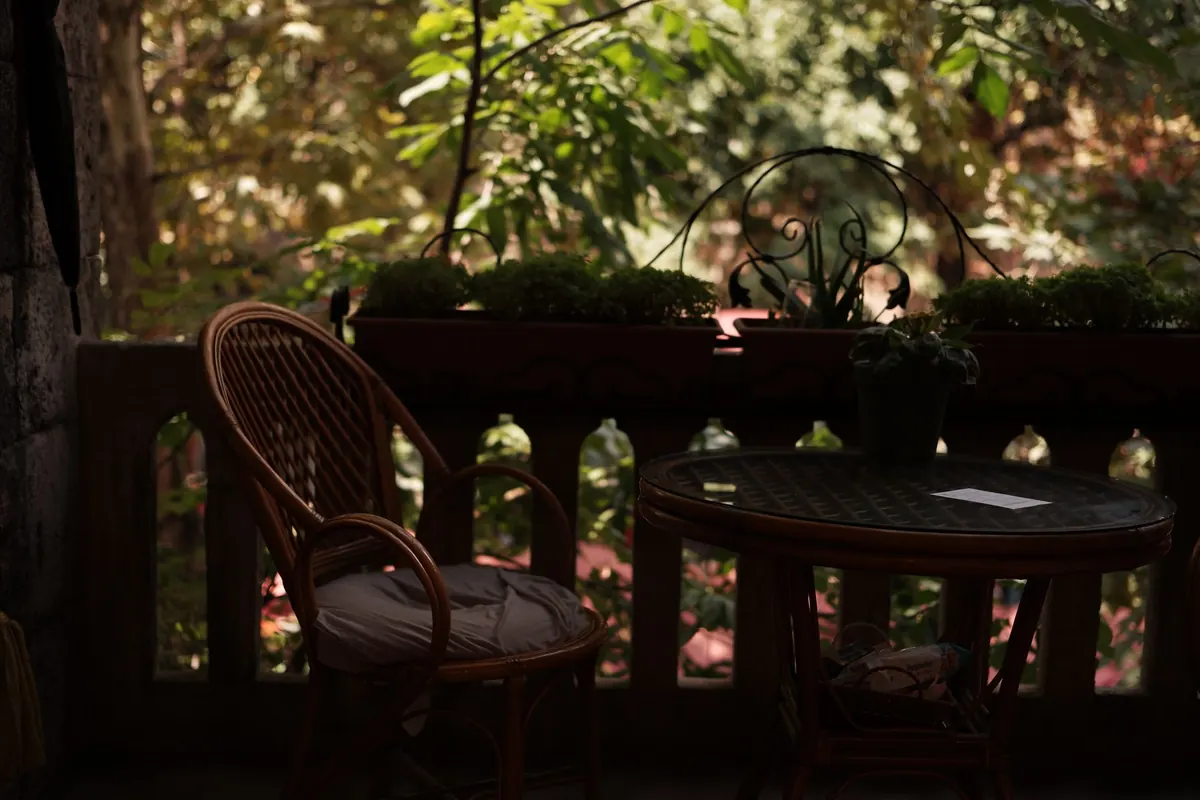
Natural rattan is a palm vine that is beautiful, light, and not built for open sky. Under a covered pergola it can last years. Fully exposed to sun, rain, and freeze-thaw cycles, it fades, dries, cracks, and grows mildew. If your terrace has no roof over it, natural rattan is a seasonal accent at best.
Synthetic resin wicker is the version that belongs on a rooftop. Look for UV-stabilized polyethylene (HDPE) weave, which handles sun and rain without much complaint and cleans up with a hose and a soft brush. Strands do trap dust and pollen, so a quick rinse every few weeks keeps it looking sharp. PVC weaves tend to be stiffer and can grow brittle after years of hard cold. In a cold climate, HDPE is the safer bet.
Then check the frame underneath the weave. Almost all synthetic wicker wraps an aluminum frame, and that is what you want. Cheaper sets sometimes use steel, which rusts from the inside where you cannot see it until the weave starts to stain or sag. On comfort, wicker has a slight give that many people find relaxed and easy for lounging, though vinyl weave can feel clammy against bare skin on a hot day.
Weather resistance, maintenance, comfort, and cost
- Weather resistance: Aluminum is the most forgiving in rain and humidity. Teak handles sun, rain, and frost with equal patience. Synthetic wicker does well in sun and rain; natural rattan does not belong in full exposure.
- Maintenance: Aluminum is a wipe-down. Teak wants a yearly clean plus optional oiling. Synthetic wicker needs occasional rinsing and a frame check. Natural rattan wants to be brought in.
- Comfort: Teak is warm to the touch and feels substantial. Aluminum needs good cushions and can run hot or cold. Wicker has a springy, casual feel but can feel sticky in heat.
- Cost: Teak generally sits at the top. Synthetic wicker falls in the middle. Aluminum is usually the most affordable, though marine-grade finishes and quality welding narrow that gap.
Cushions, covers, and mixing materials
Whatever frame you choose, your cushions will decide how the terrace feels — and they will wear out first. Look for solution-dyed acrylic or olefin covers that hold color against UV, and quick-dry foam that lets water pass through instead of staying soggy for days. A breathable cover or a deck box is the single best investment you can make on an exposed roof; no frame material can save a cushion left out through a wet week.
You are also not locked into one material. A teak dining table with aluminum chairs is a common and sensible pairing: the table stays put in wind, the chairs stay easy to move. Wicker lounge seating with an aluminum side table works the same way, with the lighter piece handling the awkward spots.
A simple way to decide
Answer these five questions honestly and the choice mostly makes itself:
- How exposed is the space? Fully open sky favors aluminum or teak; a covered pergola opens the door to natural rattan.
- How much weight can the roof take? Heavy teak and stone tops need a structure that can carry them.
- How much upkeep will you actually do? If the answer is "almost none," aluminum wins.
- How do you use the terrace? Dining sets stay put; loungers get rearranged constantly, which favors lighter frames.
- Where does everything live in winter? If you can store it, natural materials become more viable. If it stays out, buy for that.
If you want one recommendation: teak if your budget allows and you like caring for things that last, powder-coated aluminum if you want the least work, and UV-stabilized synthetic wicker if comfort and a softer look matter most. Buy the material you will realistically maintain — a mid-range frame you keep covered will outlast an expensive one you leave to the weather.
Photo: cuncon / Pixabay